Award Show Production in Hyderabad: Planning a Professional On-Stage Experience
An award show is more than a ceremony where winners walk onto a stage and collect their trophies. It is an opportunity to recognise achievements, celebrate people, and create moments that the audience will remember long after the event ends. From the opening announcement to the final award presentation, every part of the programme contributes to the overall experience.
Behind a successful award ceremony is careful planning. Stage design, lighting, sound, video content, presenter coordination, and timing all need to work together. Even a small technical issue or a delayed presentation can interrupt the flow of the programme and take attention away from the people being honoured.
This is why award show production in Hyderabad requires a combination of creative planning, technical expertise, and reliable event coordination. Whether you are organising a corporate awards night, an industry recognition ceremony, an employee appreciation event, or a large-scale awards function, the goal is to create a professional stage experience that keeps the audience engaged and gives every winner the recognition they deserve.
Start With the Purpose and Format of the Award Show
Before planning the stage or selecting production equipment, define what the event is intended to achieve. A corporate employee awards ceremony may focus on appreciation and team motivation, while an industry awards night may highlight professional achievements and bring together leaders from different organisations.
The event format should reflect these objectives. A formal awards ceremony may need a sophisticated stage, carefully planned speeches, and a structured presentation schedule. A more energetic awards night could include live entertainment, audience interaction, video highlights, and a dynamic opening sequence.
The expected audience also influences the production plan. Consider the number of guests, the venue, the number of award categories, the presence of VIPs, and whether the event will be recorded or streamed online.
When these details are confirmed early, the production team can recommend suitable equipment, stage dimensions, presentation formats, and technical arrangements. This creates a clear foundation for the entire event.
Design a Stage That Looks Professional From Every Angle
The stage is the main visual focus of an award show. It is where presenters introduce nominees, winners receive recognition, and photographers capture important moments. Its design should look impressive while providing enough space for people to move comfortably.
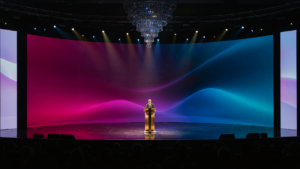
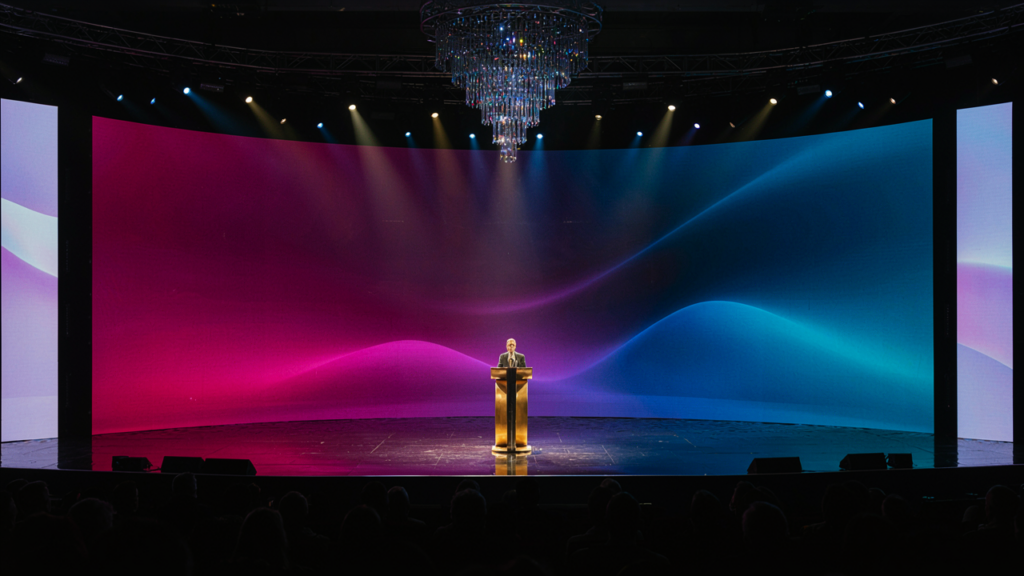
For a corporate awards event, a clean backdrop, a well-positioned event logo, an illuminated stage design, and carefully selected colours can create a professional appearance. Larger productions may use LED screens, layered stage structures, decorative lighting, and digital graphics to make the presentation more engaging.
However, an elaborate stage is not automatically a better stage. The design must suit the venue, audience size, programme format, and available budget. A stage that is too small can become crowded during group photographs, while an oversized setup may leave little room for guest seating or other event activities.
Visibility is equally important. Guests seated at the back should be able to see the presenters, award recipients, and key visuals. The layout should also provide clear access points for winners and presenters, reducing unnecessary movement during the ceremony.
A well-planned stage combines visual appeal with practical functionality.
Use Lighting to Highlight Every Important Moment
Lighting helps create the atmosphere of an award show and directs the audience’s attention to the right place at the right time. The lighting used during the opening sequence may be different from the setup for an award presentation, a winner’s speech, or a musical performance.
Stage lighting can highlight presenters, illuminate the award area, and add depth to the background. Moving lights and coordinated effects may suit a large entertainment-focused ceremony, while softer and more controlled lighting can work well for formal corporate events.
The lighting plan should be developed alongside the stage design and show schedule. For example, the technical team should know when the spotlight needs to move towards a presenter, when a winner is expected to enter, and when the stage should be prepared for a group photograph.
Photographers and videographers should also be involved in these discussions. Lighting that looks dramatic from the audience’s perspective may create unwanted shadows or affect the quality of recorded footage.
Before guests arrive, conduct a lighting test using the actual stage setup. This helps the team identify issues and make adjustments before the ceremony begins.
Get the Sound and Audio Coordination Right
Clear audio is essential for any award ceremony. Guests need to hear the host, presenters, winner announcements, acceptance speeches, and entertainment without struggling to follow what is happening.
The sound system should match the venue’s size and layout. Speaker placement, microphone selection, audio levels, and sound coverage all affect how clearly the programme reaches the audience.
Wireless microphones can provide flexibility for presenters and award recipients, but batteries, signal quality, and backup equipment should be checked in advance. If the event includes performances, video playback, or remote speakers, those audio requirements should also be tested.
A dedicated audio technician should monitor the system throughout the show. This allows the team to respond quickly to microphone problems, feedback, or unexpected changes in the programme.
Rehearsals are particularly useful for checking transitions between speakers, music, video clips, and award announcements. Good audio coordination keeps the programme professional and ensures that important messages are not lost.
Plan the Award Presentation Sequence Carefully
The order of presentations has a direct impact on the pace of an award show. If announcements take too long or presenters are not ready, the audience may lose interest and the programme may run behind schedule.
Start by preparing a detailed running order. It should include the opening, welcome speech, award categories, nominee videos, presenter introductions, winner announcements, acceptance speeches, entertainment segments, and closing remarks.
Each segment should have a planned duration and a clearly assigned person responsible for it. Presenters should know when to enter, where to stand, how to introduce the category, and how to hand over the award.
Winner information must also be checked before the event. Names, designations, company names, award titles, and pronunciation should be confirmed to avoid mistakes during live announcements.
For larger ceremonies, a stage manager can coordinate presenters, award assistants, audio technicians, lighting operators, and video playback. This person helps keep everyone aligned with the running order and communicates any changes to the relevant teams.
A well-rehearsed programme allows the ceremony to feel natural without sacrificing timing or accuracy.
Integrate LED Screens, Videos, and Digital Content
Visual content can make award presentations more meaningful by showing the achievements behind each recognition. Nominee profiles, short achievement videos, company highlights, event branding, and winner graphics can help audiences understand why each award matters.
LED screens are useful for displaying content to larger audiences and creating a consistent visual experience. They can also support live camera feeds, presentation slides, sponsor messages, and event information.
The content should be prepared in the correct format and tested on the actual display system. Video files, presentation slides, transitions, and graphics should be checked before the event to avoid delays or visual inconsistencies.
A playback operator should know the exact order of each file and when it needs to appear. Backup copies of important videos and presentation assets are also useful if technical problems occur.
Digital content should support the ceremony rather than compete with it. Short, relevant visuals are often more effective than lengthy videos that interrupt the flow of the programme.
Coordinate Presenters, Winners, and Backstage Movement
The audience sees the stage, but much of the coordination happens behind it. Presenters need to be ready at the right time, award trophies must be available, and recipients need to know where to wait before their names are announced.
Without clear backstage arrangements, people may enter late, stand in the wrong position, or miss important instructions. These small problems can disrupt the stage experience even when the production equipment is working perfectly.
Create a backstage schedule that identifies presenter call times, award order, holding areas, entry points, and the person responsible for each transition. Award assistants should check that the correct trophy or certificate is ready before every category.
For corporate events with multiple award recipients, a clear collection and exit route helps avoid crowding. The stage should also have enough space for individual presentations and group photographs.
A dedicated backstage coordinator can communicate with the stage manager and help presenters and winners feel prepared. This is particularly important when the event includes senior executives, special guests, or a large number of award categories.
Keep the Audience Engaged Throughout the Ceremony
A professional award show should recognise achievements while maintaining the audience’s interest. Long gaps between categories, repetitive speeches, and poorly timed entertainment can make even an important event feel tiring.
A balanced programme can include short nominee videos, meaningful host interactions, musical performances, achievement highlights, and brief audience participation segments. These elements should complement the awards rather than overshadow them.
The host plays an important role in maintaining the energy of the event. A confident presenter who understands the audience can introduce categories clearly, manage transitions, and help the programme recover if there is a delay.
Audience comfort matters as well. Comfortable seating, clear visibility, suitable room temperature, refreshments, and convenient access to facilities contribute to the overall experience.
The aim is to create a ceremony that feels well-paced and respectful of the audience’s time while giving every award recipient an appropriate moment of recognition.
Prepare for Technical Issues and Last-Minute Changes
Live events rarely follow every detail of the original plan. A presenter may arrive late, a video may fail to play, a microphone may stop working, or the programme may need to be shortened.
A professional production plan anticipates these possibilities. Backup microphones, spare batteries, alternative playback files, additional technical checks, and clear escalation procedures can help the team respond quickly.
The production crew should also have a shared communication method. This allows the stage manager, audio team, lighting operators, presenters, and event coordinators to respond to changes without creating confusion.
A full technical rehearsal is particularly valuable for larger award shows. It allows the team to test the stage, screens, audio, lighting cues, walk-on music, video playback, and award transitions in the correct sequence.
The purpose of contingency planning is not to eliminate every possible problem. It is to ensure that the team knows what to do if something does not go according to plan.
Budgeting for Award Show Production in Hyderabad
Award show production costs depend on the scale and complexity of the event. Venue requirements, stage construction, LED screens, lighting equipment, sound systems, technical staff, video production, décor, and rehearsals can all influence the final budget.
The most effective approach is to identify the elements that matter most to the event’s objectives. A company organising an internal employee recognition ceremony may prioritise clear sound, a professional stage, and efficient presentations. A large industry awards night may require more elaborate visuals, multiple cameras, entertainment, and additional production support.
Request detailed quotations that explain equipment specifications, crew requirements, transportation, setup, dismantling, and any additional charges. This makes it easier to compare suppliers based on the complete service rather than the headline price alone.
A contingency allowance should also be included for unexpected production requirements. Confirming technical specifications and responsibilities early can reduce last-minute expenses and help the team deliver a consistent result.
Choose the Right Award Show Production Partner
Selecting a production partner is an important decision, particularly when the event involves multiple award categories, senior guests, complex stage visuals, or live entertainment.
Look for a team that understands your objectives, can explain its production approach, and has relevant experience with similar events. Ask about its planning process, technical equipment, crew responsibilities, rehearsal arrangements, and approach to unexpected problems.
It is also important to establish who will coordinate the different teams on event day. Clear communication between the organisers, venue staff, production crew, presenters, and suppliers helps prevent confusion.
For organisations planning an award ceremony in Hyderabad, working with an experienced event management team can make it easier to bring stage design, technical production, scheduling, and guest experience together.
At 5M Events, a structured approach to event planning and production can help businesses organise professional gatherings that reflect their brand and objectives. The right production plan should be tailored to the event’s format, audience, venue, and budget rather than relying on a standard setup.
Frequently Asked Questions
What is included in award show production?
Award show production may include stage design, lighting, sound systems, LED screens, video playback, event branding, technical crew, backstage coordination, rehearsals, and on-stage show management. The exact services depend on the event’s requirements.
How much does award show production cost in Hyderabad?
The cost depends on the venue, audience size, stage design, equipment, number of award categories, technical staffing, and programme complexity. A customised quotation is the best way to estimate the budget accurately.
How early should award show production planning begin?
Planning should begin as early as possible, particularly for large ceremonies. Early preparation gives the team time to finalise the venue, stage design, suppliers, award sequence, content, rehearsals, and technical requirements.
Why is a stage manager important for an award ceremony?
A stage manager coordinates the running order, presenter movements, award handovers, technical cues, and backstage activities. This helps the programme run smoothly and reduces confusion during live presentations.
How can an award show keep its audience engaged?
A balanced programme, confident hosting, short videos, well-paced award announcements, suitable entertainment, and comfortable seating can help maintain audience interest throughout the ceremony.
What should organisers check before the award show begins?
Organisers should test microphones, speakers, lighting cues, LED screens, videos, presentation files, and walk-on music. They should also confirm award recipient details, check trophies, brief presenters, and conduct a technical rehearsal.